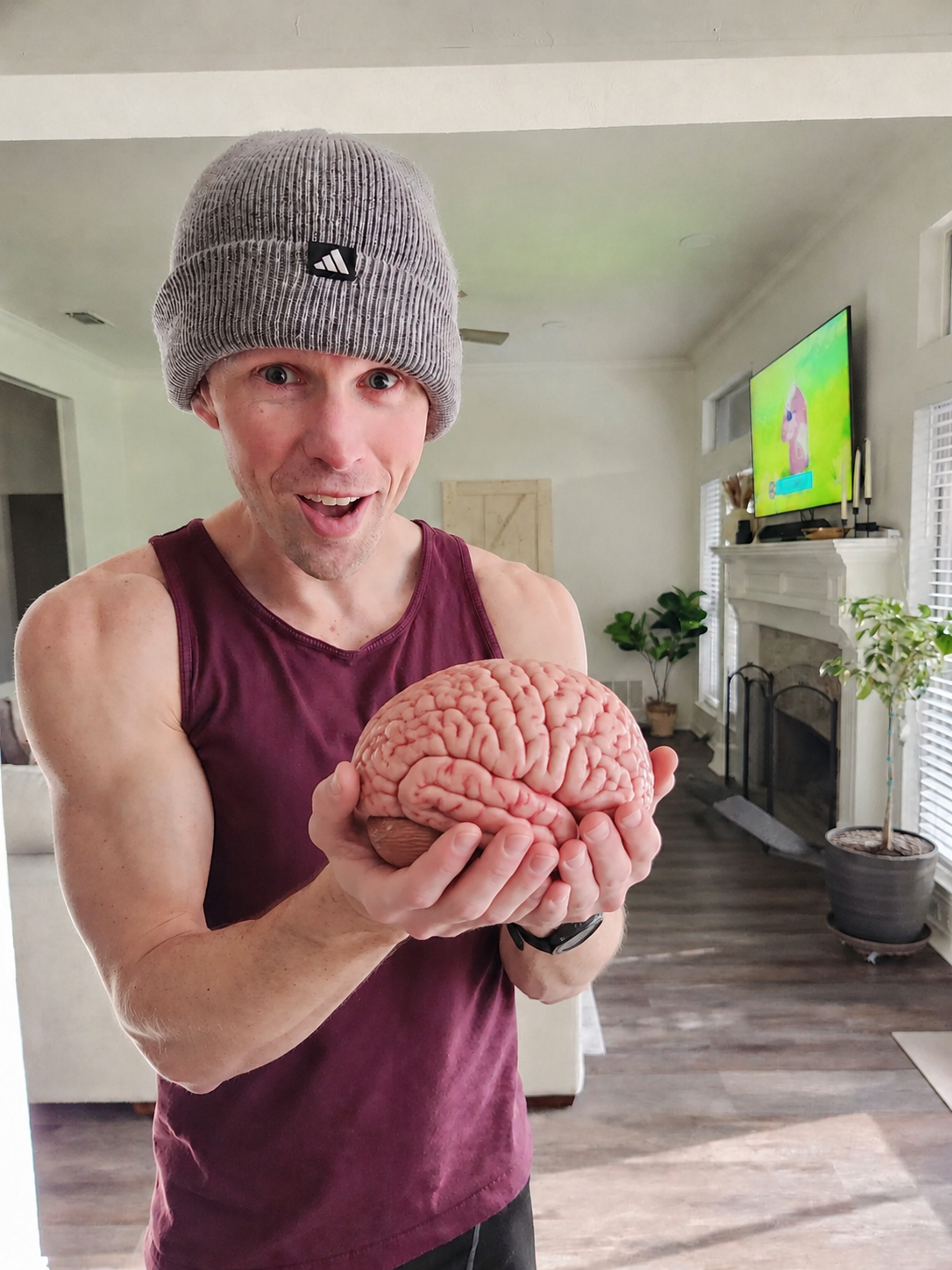
Dr. Tom Dayspring is a brilliant lipid educator who has helped inspire the New Wave of Lipid Geeks (there are about 7 of us). And whenever he discusses cholesterol in the brain (like he did on THIS RECENT PODCAST), you should definitely listen!
But since “cumulative exposure” to complex biochemistry leads to “greater retention” of material over time, THIS LINK will take you to a shorter Podcast episode where I discuss the core concepts of brain cholesterol. Hopefully between the various presentations, you can avoid neurofibrillary tangles of confusion regarding this complicated topic.
Additionally, I discuss ApoE below the brain HERE and the potential role of Ezetimibe in neurodegenerative disease HERE. And if that wasn’t enough, there is an interesting article on brain cholesterol and the autism spectrum HERE.
And along with the above links, which hopefully can serve as a Central Hub for Central Nervous System Lipid Discussions, I figure this is as good of a place as any to discuss another topic that was mentioned on Dr. Dayspring’s Podcast episode, which is 24s-hydroxycholesterol. Buckle up!
As with most things in biology, there is a “Sweet Spot” when it comes to cholesterol in the brain. Cholesterol excess in cell membranes leads to increased activity of beta and gamma secretases, leading to increased conversion of amyloid precursor protein (APP) to amyloid beta. Conversely, alpha secretases steer APP toward a non-pathogenic fate. (Amyloid beta, hyperphosphorylated tau, and neurofibrillary tangles are some of the hallmark characteristics of Alzheimer’s Disease…although those of you reading this would probably agree with me that “Everything is Ultimately a Lipid Disorder!”
And although most flavors of oxysterols are toxic, 24s-hydroxycholesterol (24-OHC) is an important regulator of cholesterol homeostasis in the central nervous system. Indeed, if the tightly regulated cholesterol quota in the neuron is on the high side, the enzyme CYP46A1 can convert the excess cholesterol to 24-OHC. This oxysterol can then diffuse across the blood brain barrier and be cleared at the liver and/or be incorporated into the bile.
But 24-OHC is confusing, as THIS ARTICLE demonstrates. In some studies, it is elevated in the cerebrospinal fluid and plasma of folks with Alzheimer’s…and in some studies the 24-OHC levels are decreased compared to age-matched controls. It’s thought that 24-OHC may increase in earlier stages of disease when the neuron is trying to frantically purge excess cholesterol and later decrease when too many neurons have given up the fight…but I don’t think we fully know.
To make matters even more confusing, 24-OHC seems to possibly have positive or negative effects depending on the study. Certain studies suggest 24-OHC decreases amyloid beta production, minimizes tau hyperphosphorylation, and prevents loss of neurons. However, other studies suggest it may lead to increased amyloid beta toxicity while promoting inflammation and a pro-oxidative state.
To add another layer of intrigue, Efavirenz, an old-school HIV medication best known for giving people trippy dreams, activates CYP46A1 and increases 24-OHC, and this drug seemed to help mitigate cognitive decline in rodent models of Alzheimer’s Disease. It was even studied HERE in humans. Efavirenz didn’t seem to hurt them, but the sample size was small and the follow-up period was rather short; at this point we can only dream of a world in which we know the answer to the unresolved question of its off-label utility.
In the original podcast, it was stated that 24-OHC isn’t “ready for prime time” as a biomarker, mainly due to lack of commercial availability. But I think we also need to have a clearer understanding of its function in various contexts before adding it to our armamentarium of biomarkers.
At this point, if someone starts recommending HIV medications for dementia prophylaxis while simultaneously telling you that the science is settled on 24-OHC’s role in brain cholesterol homeostasis, that’s probably the Efavirenz talking. But I hope that brilliant researchers out there can help us in the ongoing quest to not only better understand 24-OHC, but ultimately help make dementia a distant memory. Now THAT’S something worth fantasizing about!