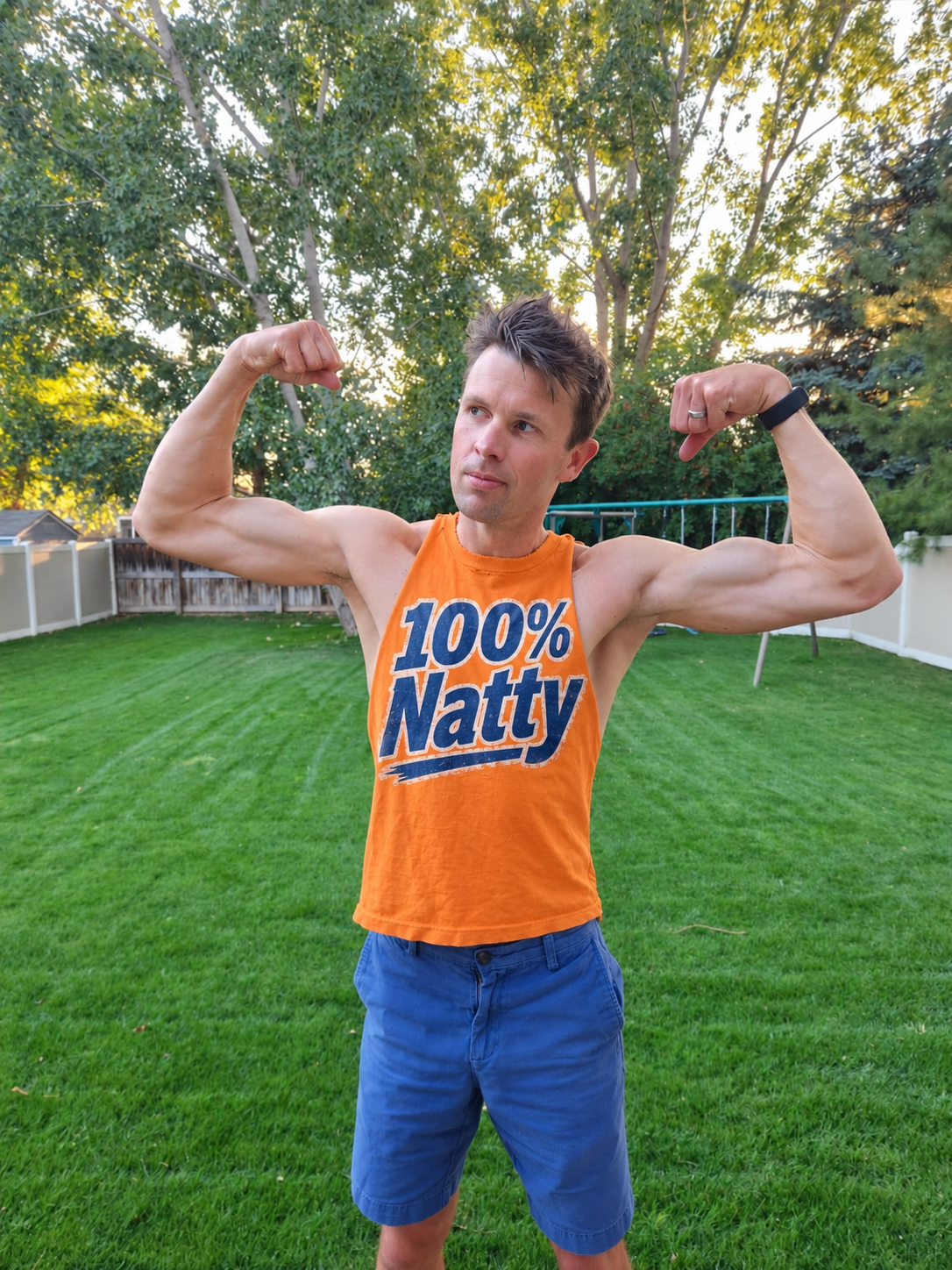
This NEW ARTICLE about “off-label” testosterone prescription and risk of cardiovascular events has been making the headlines largely buried beneath the litany of ads telling guys that their total testosterone of 650 “isn’t high enough.” And although it was a retrospective observational study, it didn’t really help the cause of your local Steroid Shack “Men’s Health Clinic,” particularly when HUNDREDS OF THOUSANDS OF DUDES were included in the study.
When compared with guys who actually had a more legitimate reason to be on the sauce, the guys who were prescribed TRT despite NOT having a diagnosis of Low T had a 51% increased risk of major adverse cardiovascular events (MACE). All-cause mortality was 90% higher, and there was a 32% increased risk of heart failure over the 10 year follow-up period. These associations persisted after Sensitivity Analyses, which are “What If” analyses that attempt to account for other variables that may be related to the outcome of interest.
So is this article just another conspiracy attempting to combat the perception of “Toxic Masculinity?” Is the medical establishment trying to create a generation of Beta Males to cover up their own insecurities? And what about the emerging topic of TRT for women? I think these topics are important, but I believe we can reach a Nirvana of Nuance if we approach the issues with thoughtfulness. So here we go…The TESTO MANIFESTO!
Since chivalry is alive and well, let’s start with the ladies, and I’ll keep it brief. If you’re a female and are now capable of growing a mustache that Tom Selleck would envy, your voice has gone from sultry to Darth Vader-esque, and your husband “really needs a break” from your romantic advances, you’ve overshot things. However, many women could probably benefit from low doses, and I think this is an emerging topic that deserves further dedicated research.
And for males? Well, this becomes a similar situation to post-menopausal HRT. In the right person at the right time with the right formulation, it may lead to both cardiovascular benefits and improvements in quality of life. Conversely, it’s possible that it may exacerbate underlying cardiovascular disease in the wrong person at the wrong time with the wrong system of delivery. I think the issue is even more murky than post-menopausal HRT.
So what does TRT do for you? I don’t remember where I first heard this, but testosterone “Makes Effort Feel Good.” If you get on the sauce and sit around watching Netflix, you’re not taking advantage of an incredible performance enhancer. Conversely, if you are on TRT, it allows you to pick up heavy things, sprint, and be even more of a Spartan at life than you otherwise could be without help. Instead of having normal physiologic fluctuations in testosterone over the course of the day, you essentially remain at whatever level you’ve achieved if you’re dosing consistently and properly. But one guy’s “optimal level” might be different than another guy’s “Sweet Spot” due to genetic variances in androgen receptor density, limiting the generalizability of recommended target levels.
That said, if you are a bro and you have “low T,” (and yes, low T has been associated with increased cardiovascular and all-cause mortality), let’s ask a few questions about why your T may be low:
- Is your testosterone low and are you also incapable of smelling (a condition known as anosmia) AND are you still waiting to go through puberty? Then you may have Kallmann Syndrome, a rare pituitary disorder (the likelihood of this is even more unlikely than you actually NEEDING TRT if you’re pulling all the right lifestyle levers and you’re under age 30). Another uncommon endocrine cause of Low T in a young male is hyperprolactinemia, so make sure that’s on your radar as well. However, these things aren’t commonplace, which should help you deduce how I feel about mandatory Testing of Testo levels in young Military Personnel unless it’s being used as a potential biomarker of OVERTRAINING. Which brings us to…
- Is your testosterone low and are you running 100 miles a week, starving yourself, or going through Navy Seal training?
- Well, maybe mix in a rest day here and there or consider breaking your fast.
- Is your testosterone low and are you drinking a bunch of alcohol?
- I’ll still be your friend, but if you think that drinking alcohol is a good choice for optimal health and performance, read Chapter 2 of THIS BOOK. If you stop drinking alcohol, your testosterone will inevitably go up.
- Is your testosterone low and are you either completely sedentary, eating a Standard American Diet (SAD), not sleeping well, and overly stressed (or some combination of all of the above)?
- Pick up heavy things, sprint, stop eating crap, and then your subtle sleep apnea will go away too so you’ll sleep better. And when you feel better, you’ll probably be less stressed. And then guess what? YOU PROBABLY WON’T HAVE LOW TESTOSTERONE ANYMORE.
Ok, now back to cardiovascular health! The potential for TRT to result in polycythemia (blood that’s THICC) is well-known. And as far as cardiovascular health goes, if your testosterone is sky-high and you’re dosing yourself with so much sauce that you have to dump blood every week, you probably ought to throttle back. A recent trial called the TRAVERSE study suggested that TRT is not harmful in regards to cardiovascular health, but it utilized a testosterone gel and they limited the blood levels of testosterone achieved in the patient population…so I don’t think they really answered the question given they used a garbage formulation and didn’t reach real-world testosterone levels.
THIS TRIAL of testosterone in those with coronary plaque showed some progression of soft plaque in certain individuals…although CAC scores remained largely unchanged. In vitro studies show that testosterone may play a role in hyper-elongating glycosaminoglycan chains in the artery wall (a bunch of big words that mean potentially worsening existing cardiovascular disease). And testosterone increases hepatic lipase, leading to a temporary reduction of HDL-C; whether or not this has any meaningful physiologic consequence is unknown. Plus, if you take a bunch of TRT and never do aerobic exercise, you are likely going to experience concentric hypertrophy of your heart muscle without proper eccentric hypertrophy to balance things out. Which can result in elevated blood pressure and other cardiac dysfunction (like heart failure) over time.
So do you need TRT? Probably not. Will it help you pull the levers to be a champion in life? Possibly, but maybe you should first just try to do those things anyway. And then if you’re still low, do some baseline cardiovascular risk stratification, be aware of the Pros and Cons, and then maybe consider it. I’ve prescribed TRT on many occasions and I’m certainly not opposed to it, but I think it’s often overused and employed irresponsibly.
I went through some very serious illnesses and at one point, my total testosterone plummeted as low as 70. Did I feel good? Nope. And I was even placed on TRT for a brief time. But thankfully, I was able to taper off of it and now I sit around 800. How did I do this? Picked up heavy things. Sprinted. Didn’t eat crap or drink alcohol. Slept. Asked God to help me manage my stress levels. Day after day.
One of my favorite studies enrolled guys who unfortunately had to be on androgen deprivation therapy for prostate cancer (you have to drive your testosterone levels down to zero in order to sensitize the prostate to radiation). And these guys had testosterone levels of VIRTUALLY ZERO…I’d say that’s “Low T.” And the group that continued to resistance train experienced NO LOSS IN MUSCLE MASS despite having the lowest T ever. Did their “effort feel good?” I guarantee they felt like death…I’ve been there. But they manned up and decided that it’s better to feel like crap and be strong then to feel like crap and be weak. Kudos to those guys, and I think that should serve as inspiration to all of us to do everything we can to be good stewards of our hormonal health.
So in summary:
- Testosterone “Makes Effort Feel Good” and can help catalyze beneficial lifestyle changes.
- In the right person at the right time with the right formulation, TRT may lead to both cardiovascular benefits and improvements in quality of life.
- It’s possible that TRT may exacerbate underlying cardiovascular disease in the wrong person at the wrong time with the wrong system of delivery AND/OR be related to cardiovascular harm in guys who don’t really need it/who are dosing irresponsibly.
- TRT is, with rare exception, a life-long commitment. If it helps you make the life-long commitment to Picking Up Heavy Things and Being a Spartan, then that’s good. But let’s make sure we aren’t Injecting without first Reflecting on the Pros and Cons.