Rats have been responsible for various plagues and pestilences throughout human history, and given their fecundity and ubiquity, they are nowhere near the Endangered Species list…except for one place on the planet: the Canadian province of Alberta.
But it’s not simply because Canada is cold and rodents don’t like hockey; Alberta has employed a dedicated Rat Control program since the 1950s. This program first identified the Saskatchewan border as the likely entry point for potential perpetrators. Then, since the vulnerable area had been narrowed down to a manageable segment, regular assessments of the region were performed by trained professionals. If rats were identified, they were “eraticated” quickly, and at first, the Rodent Combat Team preemptively doused high-risk granaries in the Rat Control Zone with arsenic. However, this ruthlessly blunt approach was later shifted to “targeted Warfarin” to minimize collateral toxicities to humans.
And yet, the most important ingredient in this recipe for continued success isn’t anticoagulation, reporting systems, the Pest Control team, or supportive legislation. It’s collective awareness and PERSISTENCE. The Alberta Rat Control system isn’t perfect, but it has been effective for the better part of the past century!
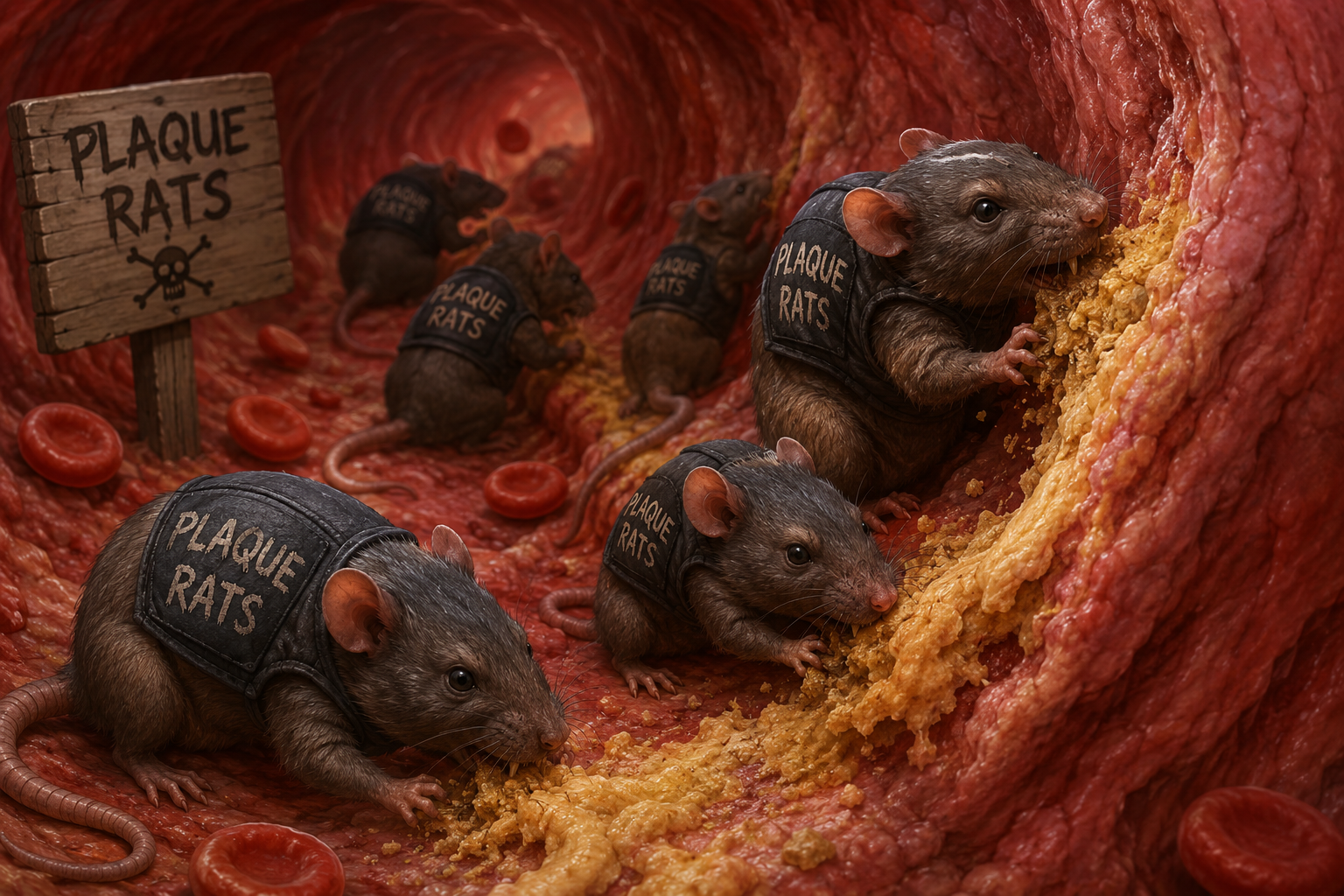
There are SO MANY PARALLELS between pest control and Cardiovascular Disease Prevention. Far too many rats continue to infiltrate the vascular beds of individuals across the globe. And there are SO MANY biomarkers and imaging tests that we could run in efforts to identify Plaque Rats before they overrun someone’s coronary arteries. We could get into the weeds of Lp-PLA2, MTHFR genotypes, and myeloperoxidase in every single patient while others try to convince everyone that CACs are “terrible since they don’t show soft plaque.” But while we’re spending time and resources on those, we could be missing an ApoBubonic infestation that could have been more readily identified had we simply used a more refined approach…perhaps something along the lines of “Home Security System and Lipid Neighborhood.”
And “putting statins in the drinking water” or “gene editing everyone’s PCSK9” is akin to blanketing the entire country in arsenic and strychnine; if we identify “vulnerability” and/or a “Plaque Rat,” then we can use more targeted therapies with minimal toxicities to help that individual before he or she “has the big one.”
Then, once appropriate education has been employed for both health care professionals and patients, PERSISTENCE is key. Regular check-ups, knowing your numbers in regards to the “Vulnerable Regions,” and having trained professionals who listen to patients and understand the various interventions are critical components to this preventive approach.
Spread awareness rather than toxic rhetoric. Don’t be an itinerant Dirty Rat who cares more about your status as a “Mammalian Pest Expert” than taking care of patients. Support the mission rather than undermine the program when a Plaque Rat is identified in a symptomatic person with a CAC of zero. Don’t miss the forest for the trees or the rodents for the cheese (not sure what that means, but it rhymes)! And maybe, just maybe, we can be like Alberta when it comes to greatly minimizing Plaque Rat-Related Pathology on a broad scale!