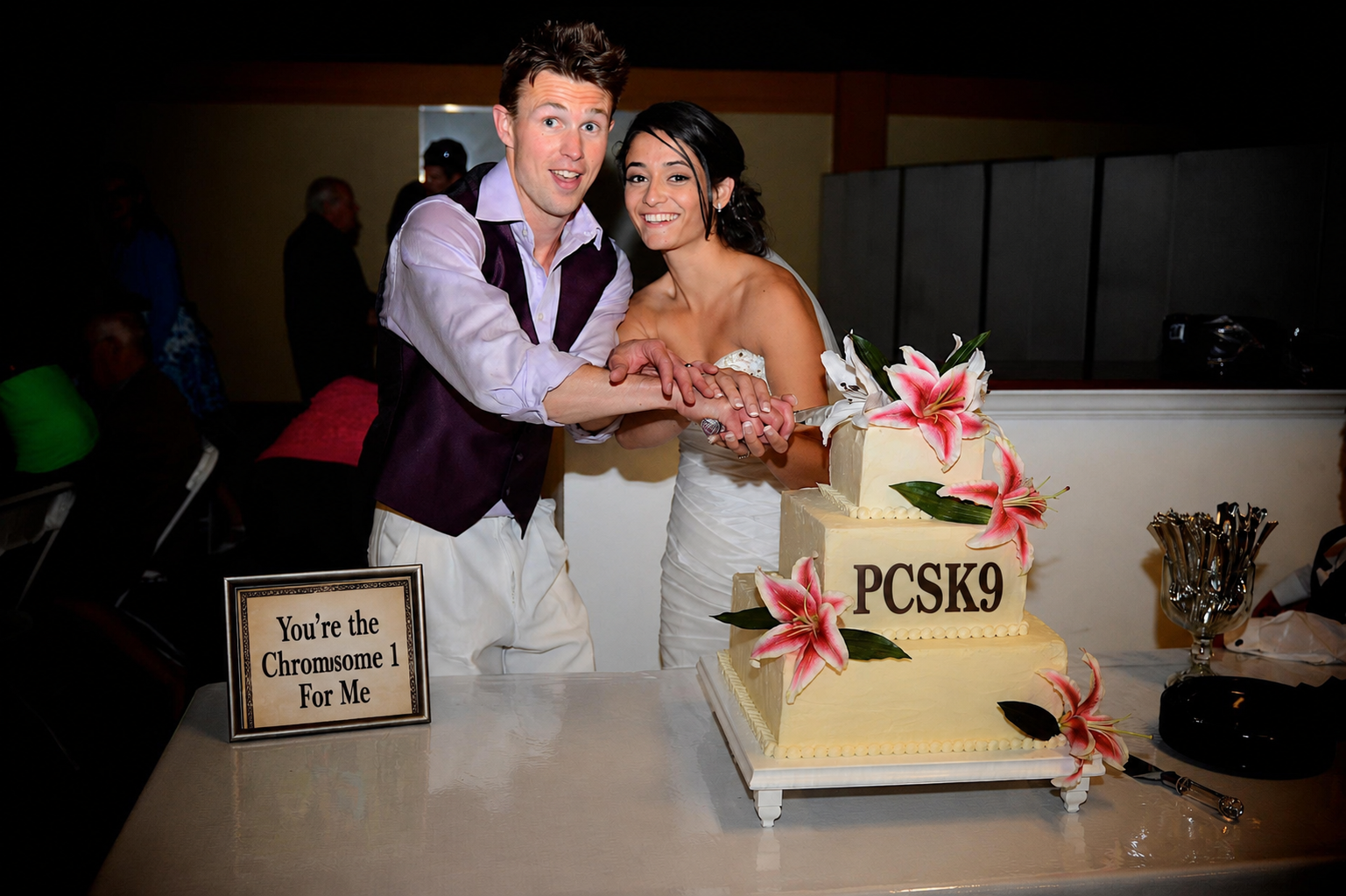
I love anniversaries, and recently my wife and I celebrated our 13th Wedding Anniversary! And that pretty much takes care of the Life and Love parts of this website. But for the “Lipids” section, we can celebrate the 20th Anniversary of PCSK9 loss-of-function variants identified in the ARIC registry! In THAT STUDY, people of white ethnicity with genetically lower amounts of PCSK9 had 47% less coronary disease, while black subjects had a stunning 88% lower risk! Let’s have a party!
And it’s fun to look back on the Photo Album of Physiology, so today we’ll spend some time reflecting on this fascinating family of serine proteases, particularly the 9th sibling that is so important in regulating LDL receptor expression and ApoB clearance, which you can read about HERE.
PCSK9 stands for Proprotein Convertase Subtilisin/Kexin Type 9, and when you can rattle that off without sounding like you’re going to puke, you know you’ve arrived at a special place of Lipid Enlightenment!
This 692-amino acid protein was initially discovered in 2003 and was named neural apoptosis-regulated convertase-1 (NARC-1), as it was first observed in cerebellar neurons undergoing programmed cell death (foreshadowing for a future discussion of PCSK9 in the central nervous system)! However, in the same year, while mapping the PCSK9 gene location on the short arm of chromosome 1, a French family with autosomal dominant Familial Hypercholesterolemia (FH) was noted to have a homozygous gain-of-function in the PCSK9 gene. This was notable, as at that time, loss-of-function mutations in the LDLR and APOB genes were the only recognized non-polygenic causes of FH, often characterized by tendinous xanthomas, corneal arcus, and premature cardiovascular disease. Not fun!
3 years later, the aforementioned ARIC study identified the PCSK9 loss-of-function variants associated with less coronary disease. Additionally, individuals have been identified with complete loss-of-function in PCSK9 and lifelong LDL-c levels of ~14-16 mg/dL; remarkably, these people appeared to have NO OTHER ISSUES. This was stunning, because usually there are significant trade-offs in Biology and life…I think we’ve all known guys who could bench press more than their SAT score. But in this case, PCSK9 appeared phenomenally “clean” and subsequently became A VERY ATTRACTIVE therapeutic target for pharmacologic intervention…in fact, the first oral PCSK9 inhibitor was approved by the FDA today!
But there ain’t no party like a Big Study Party (I think that’s how the lyric goes), so we need to circle back to the topic of serine proteases, since PCSK9 is a card-carrying member. If you think real hard, you might recall from Biochem Class the Serine Protease Catalytic Triad filled with nucleophilic attacks, oxyanion holes, hydrophobic pockets, unstable tetrahedral intermediates, and other terminology that sounds like a fight between tweakers that broke out while playing billiards. (You would probably rather take your chances in a bar fight rather than draw out this entire cascade if your life depended on it, unless you’re an Unstable Tetrahedral yourself).
But you may also recall that serine proteases typically involve inactive zymogen precursors that must be cleaved into active proteins. A classic example of this would be the pancreatic protease trypsinogen. When trypsin has the “gen,” it stays in its inactive form, which is preferable, since you don’t want it digesting your pancreas. But when it arrives in the small intestine, the zymogen trypsinogen is cleaved into trypsin, and then it can do its job of breaking down proteins into smaller peptides and amino acids. Well, PCSK9 behaves a little differently than most zymogens, since it remains non-covalently associated with its prodomain (precursor segment) even after autocatalytic cleavage…this is a “teaser” for subsequent posts about PCSK9’s protein domains and post-translational modifications (I know you can BARELY WAIT)!
So anyway, if you’re still reading this post, it’s probably obvious why I don’t get invited to many parties. But let’s take a break for now and raise our glasses to Life, Love, and Lipids…we’ve come so far, but the future may be even brighter as we continue to Laugh, Learn, and Leave mediocrity in the rearview mirror!