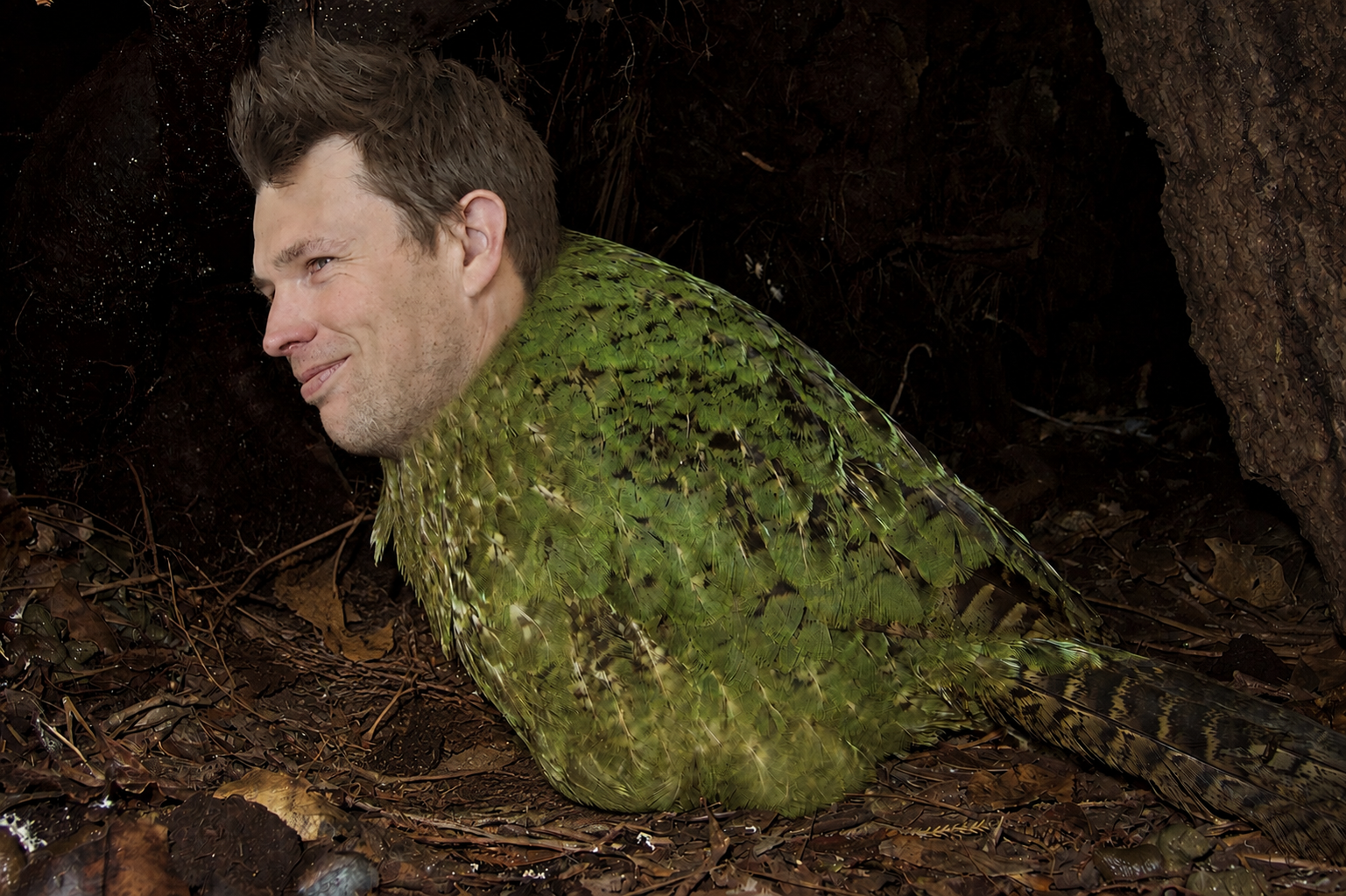
Most people are familiar with the cockapoo, and this canine cross-breed is a common companion for many pet owners. However, not as many people are familiar with the kakapo, a bird indigenous to New Zealand.
The kakapo is a nocturnal flightless parrot that is sort of a chonk (it’s the world’s heaviest parrot) and tends to live a super long time, sometimes up to 100 years. It was voted New Zealand’s “National Bird of the Year” in 2008 and again in 2020, so even though it lacks the ability to fly, it still wins awards. Inspirational! (Or maybe you’re wondering why people are voting on Bird of the Year…and the criteria for winning…and how any other fowl manages to defeat the kiwi in New Zealand…and whether COVID had anything to do with the kakapo’s 2020 victory). Maybe you also will become nocturnal as you toss and turn all night seeking answers to these burning questions.
At one point, the kakapo was thought to be extinct, but a few were discovered in the wild. So the same sorts of people who vote in “Bird of the Year” elections initiated some rigorous conservation efforts, and now there are a few hundred kakapos out there puttering around in the New Zealand nights and occasionally winning awards for continuing to exist.
But one of the reasons that the kakapos, despite their intrinsic longevity, struggle to survive, is their response to external perturbations. When faced with predators, adversity, or any sort of existential stressor, the kakapo responds by FREEZING. You’re a fat, flightless bright-green bird…you’re not fixing the problem, and you’re not fooling anyone. No wonder they’re endangered!
And this reminds me of the Israelites as they prepared to enter the Promised Land. They saw the big, scary Canaanites. And they froze. And besides a few of the faithful that flew by faith, that generation all became extinct in the wilderness.
Instead, we would do well to shift our gaze upward and “look at the birds of the air who neither sow nor reap nor gather into barns, and yet their Heavenly Father feeds them” (Matthew 6:26), trusting God for His daily provisions, and then being faithful stewards of what He has given us.
Trials will come, but shifting to a state of fearful paralysis is a recipe for remaining in the spiritual wilderness. There’s a reason why being buoyed by God’s strength as we trust and wait on Him is described as “flying on wings like eagles” rather than freezing like kakapos.
Matthew 7:24