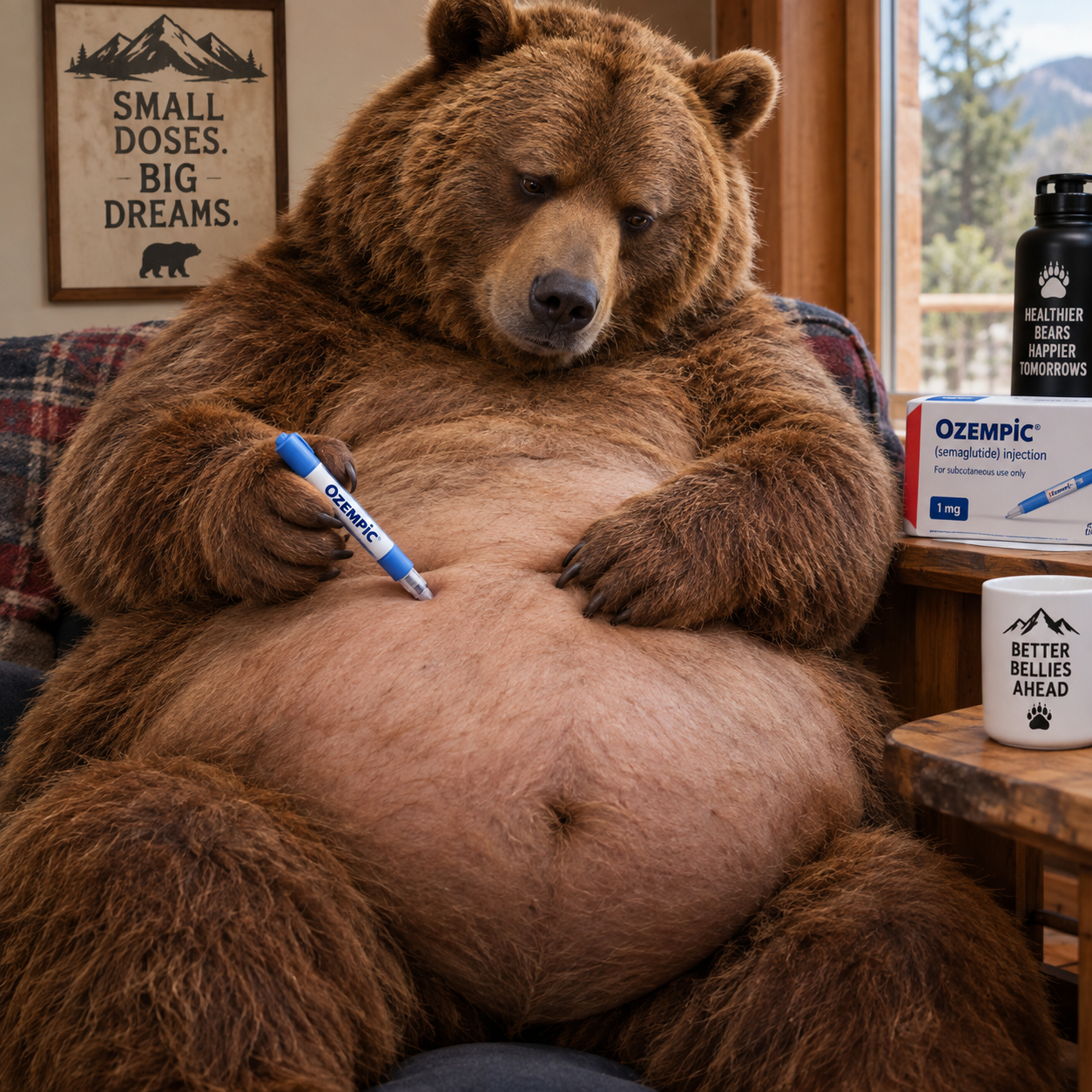
I’m torn.
Today is National GLP-1 Day…but it’s also the day that Backpack the Bear was crowned the 2026 Champion of the annual “Fat Bear Week” competition.
While we rightfully celebrate Alaska’s Fattest Bear, we simultaneously applaud a class of medications that have helped millions avoid becoming eligible for the Fat Bear Week festivities.
I guess I’ll just stick to what I know. Have fun with this summary of GLP-1s!
GLP-1 Receptor Agonists and Incretin Mimetics (basically most things that end in Tide), are not only a pharmaceutical, but a cultural phenomenon. When asked the question, “What do incretin mimetics, including GLP-1 receptor agonists, do for you?” the answer is “Pretty much everything.” They have proven effective at reducing a host of cardiovascular events as well as the number on your bathroom scale, and they may even have some benefit in neurodegenerative disease if utilized in the right person at the right time.
So what are incretins? These are gut peptides, including GIP and GLP-1, that help augment the postprandial insulin response to ingested nutrients. Under normal physiologic conditions, incretins account for 2/3 of the appropriate insulin response to eating, with GIP actually the majority player. However, when everything goes wrong (diabesity), this incretin effect is lost, so incretin modulators at supraphysiologic concentrations may be required to restore normalcy.
These drugs not only reduce cardiovascular events, they potentially affect almost every organ system in a beneficial way. Ultimately, they restore your body’s ability to use its fatty acid Savings Account when it comes to fuel partitioning. And they potently do this, in large part, by reducing appetite. Oftentimes folks with insulin resistance are plagued by perpetual “Food Noise,” and these medications organize the orchestra so you can symphonically “Control your insulin, control your life.”
Whenever I go fill up my car with gas, I don’t call up my friends and post about it on Social Media to encourage all of them to join me at Chevron Pump #4. I just fuel up and then carry on with my life. Similarly, these medications help shift people’s mindset regarding food to one of “Fueling the Machine,” rather than mealtimes being the most significant hedonic events of the day. They help catalyze a dietary shift from the Standard American Disaster to one that prioritizes protein and eats real food.
So what are the downsides to these miracle drugs? Well, if you insist on indulging in tater tots and nachos while on a GLP-1RA, you’ll puke your guts out, which is sort of the point. And if you’re a rat with Multiple Endocrine Neoplasia Type 2, then by all means stay away. But the major concern with these medications is the loss of MUSCLE MASS; you don’t want to be trading one problem (obesity) for another (sarcopenia). And the amount of lean mass loss observed in clinical trials shouldn’t be ignored.
But can this problem be avoided? Absolutely, but it requires RESISTANCE EXERCISE along with adequate dietary protein, specifically protein containing sufficient quantities of the amino acid leucine. There are 2 main stimuli for mTORC1 in skeletal muscle, which is the anabolic (growth) switch that you WANT turned on in muscle. The most important is the imposed stressor of the resistance exercise itself, and the second is sufficient leucine, so if you ensure that these issues are being addressed, you ought to be ok.
You may very well skip lunch while taking semaglutide, but there’s no proverbial “Free Lunch” when it comes to attenuating the otherwise inevitable decrease in muscle mass while on an incretin-based therapy. Go pick up some heavy things. And when you do eat, maybe swap out the cheese puffs for some cottage cheese!